After a report in April from a fellow Nightjarist in South Wales, BL made four very early visits,
going to three sites on the Northern end of the Forest but having no luck. A site on the East
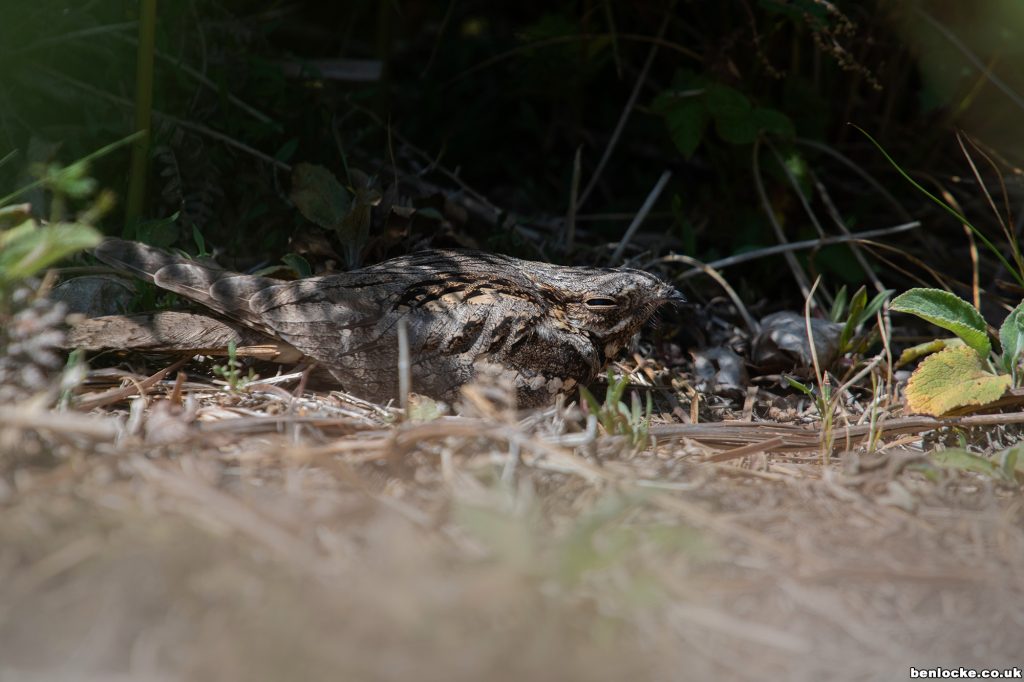
side proved a better bet, with two males seen on May 2nd . Four males were reported from
three sites the following day, and by May 7th we had reports from seven sites, suggesting
that males were arriving earlier than usual.
Our main plan this season was to follow up on the single episode of GPS tagging we had
done two years ago and we have been supported in this by generous grants from the Wye
Valley Natural Landscape and the Gloucestershire Wildlife Trust. In liaison with the BTO,
who were training and licensing RH, the ringer who would fit the tags, we had been
persuaded to use a different tag supplier. The Pathfinder tag offers a larger number of
satellite fixes than the previous supplier’s equivalent, thus providing more accurate tracking
data. The downside of this tag was that unlike the combination of GPS and Radio tags that
we used previously, they require the bird to be re-trapped to retrieve the tag and its data.
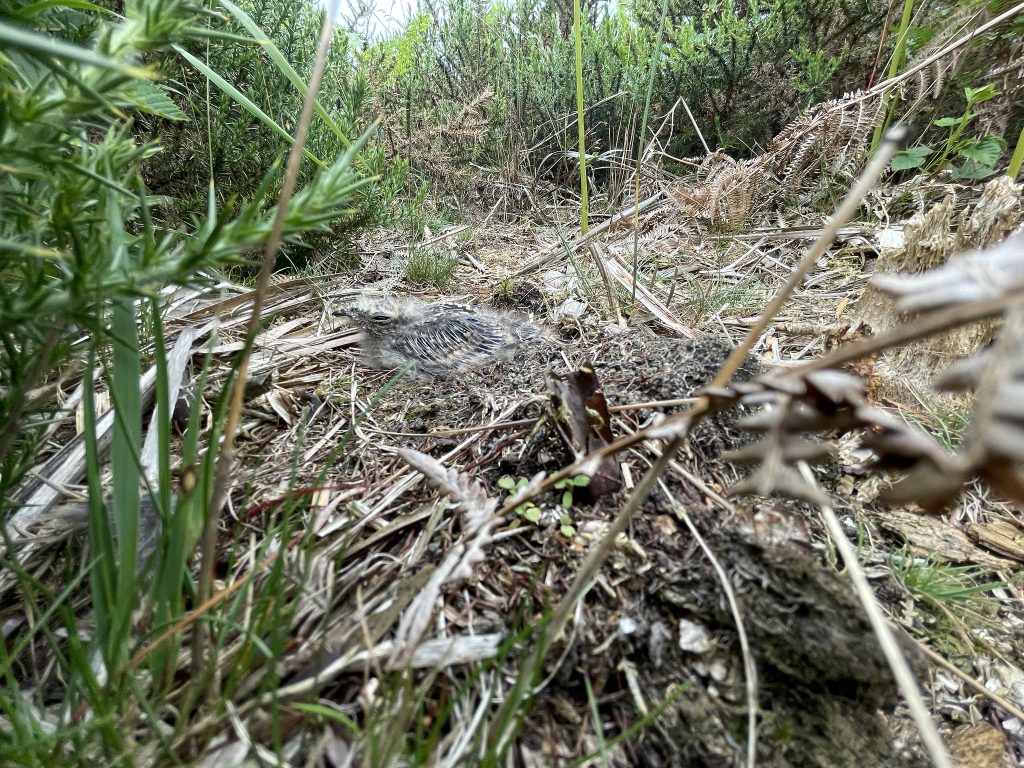
The key to this was nest finding, which provides a known location to which the birds will
return predictably.
Alongside this, there was a BTO national heathland birds survey taking place, requiring two
visits to a long list of Forest sites. So the season was dominated by nest-finding and
surveying. BL, RH and HR spent long hours searching some large sites and this, combined
with forestry work and other Nightjarists, resulted in various nests being located at four sites.
By the end of May two active nests had been located and these earmarked for attempts to
catch and tag females. Greg Conway from the BTO joined us to train RH to fit the
Pathway GPS tags and we were successful at the first attempt to trap and tag a bird over on
the Wye Valley side of the Forest. This was to prove a short-lived attempt, as the nest was
predated by a fox at the eggs stage. Happily, this pair soon tried again and their second
nest was found, close to the original. Further catches were made at two sites, and four females had been caught and tagged. Remarkably, all four of these tags were
retrieved and the data recovered.
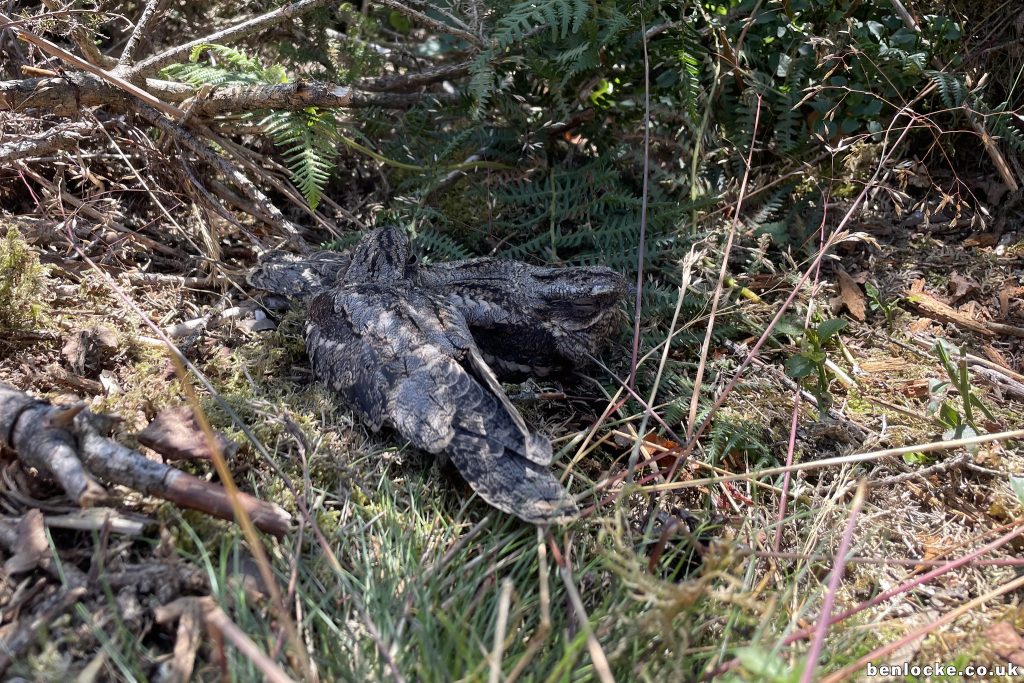
The first recovery was at Mitcheldean Meend on June 18th, followed by Edge Hills on June
25th.
Later in the season, two males were tagged and these proved to be a difficult proposition to re-trap. The time of year and no known nest site were probably the key factors here. Despite
plenty of counter-singing to the lure and interest, both birds were too canny to be caught.
The tags, mounted to a central tail feather would be lost as the birds moult.
The ever more depleted stock of AudioMoth recorders were deployed in late May. As there
weren’t enough devices to mount a large simultaneous stakeout, they were mostly used at
seven speculative sites, nearly all fairly recent clearfells or restocks. 2 of 7 of these sites
revealed a male churring at least once. Another six sites all recorded birds, only one of these
sounding like a bird holding a territory. Early in the season, males can be fairly mobile and
most of these registrations are likely to be the product of a bird flying over and seeing some
potential nest habitat and flying in to churr, speculatively.
Overall, it looks as though the number of males continues to remain stable. We were able to
account for around 20 and no doubt there are some that we never find. We were able to report some confirmed breeding but failure of nests to predation illustrate one of the hazards
facing the population.